Katie Miller

Katie Miller

Katie Miller
John Liu

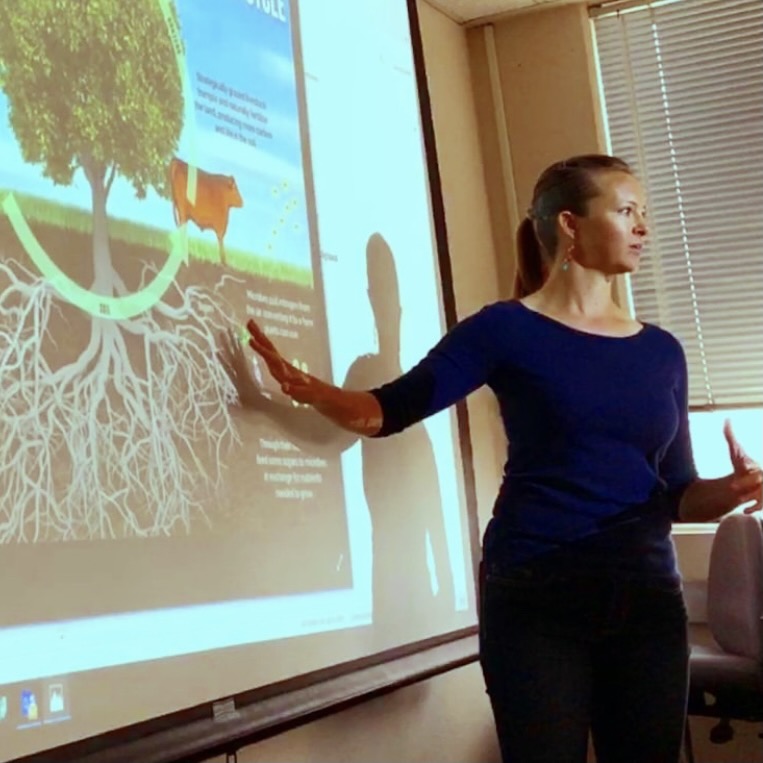
Katie Miller, a wife, mother, and proud entrepreneurial farmer and rancher, owns and operates Heritage Belle Farms and the SOCO Virtual Farmers Market. An alumna of Colorado College, where she majored in a self-designed sustainable agriculture study, Katie’s career has always been driven by her desire to be an eco-conscious cowgirl and her love for real food: growing, raising, cooking, and eating it. She teaches others to do the same, as she believes this is the most important thing anyone can do to make a positive impact on the world. Perpetually juggling farm life and home life, Katie also finds time to maintain her Holistic Management Educator Accreditation with Holistic Management International (HMI) by consulting for and working with like-minded farmers and ranchers. She also finds time to work as an Independent on-farm inspector for American Grassfed Association, volunteer as a board supervisor for the El Paso County Conservation District (EPCCD), volunteer as a Colorado Agricultural Council member for the Humane Society of the United States (HSUS), and participate in several area livestock breed associations. In the rare event of spare time, Katie enjoys horseback riding, photography, cooking, reading, and working on fiber arts projects, particularly ones for which she can use the wool from her sheep: Navajo weaving, felting, knitting, and sewing.


Webinar Week

Rocky Mountain Food Collaborative: Developing a Marketplace Owned by Producers to Incentivize Economic, Social & Environmental Change
Susan Beal

Susan Beal

Susan Beal, DVM

John Liu

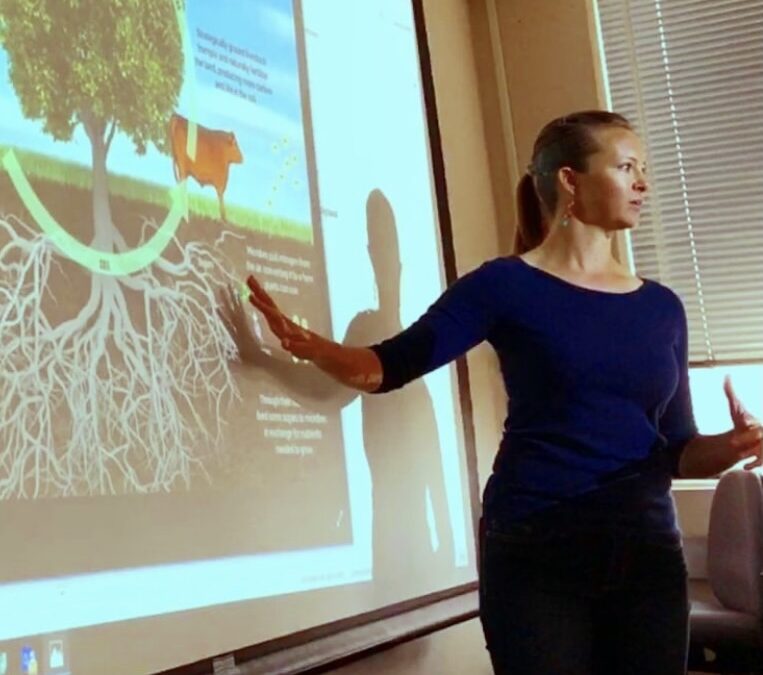
Susan Beal comes from a long background of holistic veterinary practice and is dedicated to providing integrative care for animals, humans and the environment. Susan is particularly interested in whole farm/whole system pasture-based ecology and offers common sense advice and counsel, with the goal of health from the ground up – thriving individuals and ecosystems.

Dr Beal is past president of the American Holistic Veterinary Medical Association as well as the American Pastured Poultry Producers Association (APPPA.org).

She is an enthusiastic participant and educator in Holistic Management, a whole farm/business decision-making and planning process that considers the triple bottom line of relevant economic, social and environmental considerations, simultaneously.

Susan is pursuing formal accreditation with the Savory Institute and, to date has completed training with a Savory Institute Holistic Management Accredited Professional in Holistic Management Foundations, Holistic Decision-making, Holistic Financial Planning, and Holistic Planned Grazing.
She is in the November 2019 cohort of the nRhythm Regenerative Organizational Planning group.

After being in Jefferson County, Pennsylvania for many years, Susan now lives in Elmira, Ontario, where she works with unique clients in broad geographies to forge creative solutions in regenerative agriculture and health care.

Webinar Week

Homeopathy in Livestock Health Management

Homeopathy is a self-contained system of medicine. Practiced at its best, Homeopathy is far more than prescribing little white pellets to “fix” a symptom of concern.

The art and science of Homeopathy considers Hygiene (including diet, environment and lifestyle) as an integral component in, and influencer of, health and wellness. Homeopathic medicines are used, in conjunction with species-appropriate Hygiene practices, to dynamically catalyze the individual’s return to health.

Susan Beal, DVM will introduce the basics of Homeopathy philosophy and practice. This will include discussion about the dynamics of disease, obstacles that impact vital health and the response to treatment, and the pattern of responses to treatment. There will be instruction about how to give a homeopathic medicine, the timing of the doses and how to assess the response to the medicine.

Concepts will be illustrated using both real case studies as well as “paper cases” drawn from actual field situations as Dr Beal presents a variety of situations commonly found in all aspects of farming and husbandry.

This session is appropriate for all animal species; two and four legged, feathered or furred. It is specifically geared for those who have little or no experience with the art and science of homeopathy. There will be time for questions and answers in this interactive workshop, but please don’t expect to have individual health care needs addressed in this session.

Mandy Magill

Mandy Magill

Mandy is a Regenerative Agriculture Educator and Consultant. With a background in Sociology and Environmental Affairs, Mandy passionately educates about the amazing and vast benefits of Regenerative Agriculture, Holistic Land Management, and the local sourcing of regenerative food, products, and services…ultimately, the positive impact we can have on the planet when we learn from and think like Nature.

Through her work with various farms and ranches over the years, she recognizes many of the barriers faced in transitioning to regenerative agriculture and also in promoting understanding and community support of regenerative practices and management. Her ways of educating and creating awareness are multi-faceted involving things like the creation of a regenerative agriculture storytelling tool kit (in process), giving presentations and workshops, interviewing farmers and ranchers (Tribe Green Rising YouTube channel), and working to galvanize connection around the ultimate goal of having safe and healthy communities on a biodiverse, thriving planet.

Webinar Week

Regenerative Agriculture: Dedication, Grit, and the Stories We Live and Tell
October 25  | 11:00am MT

There is a lot involved in the industrial-to-regenerative transition. It is a process that asks us to return to the indigenous roots of agriculture and partner with Nature. It can also be difficult to establish an educated and supportive community base as the complexity of working in relationship with Nature can be difficult to explain.

In partnership with the James Ranch (a regenerative ranch in Durango, CO), we are creating an educational storytelling tool kit with the goal of enabling people to experience the excitement, beauty, health, and hope of Regenerative Agriculture and Holistic Land Management and what it means to listen to, learn from, and work in relationship with Nature. The intent is to help give you the tools to share the story of your operation.

For this webinar, please come prepared to share your own experiences: who you are, how you got into Regenerative Agriculture, the current work you are doing, any problems/barriers you’re facing, and/or also what triumphs/successes have you excited and motivated?! Starting with my own story and where it has led me, I will look forward to our discussion!
Tony McQuail

Tony McQuail

Tony McQuail

John Liu

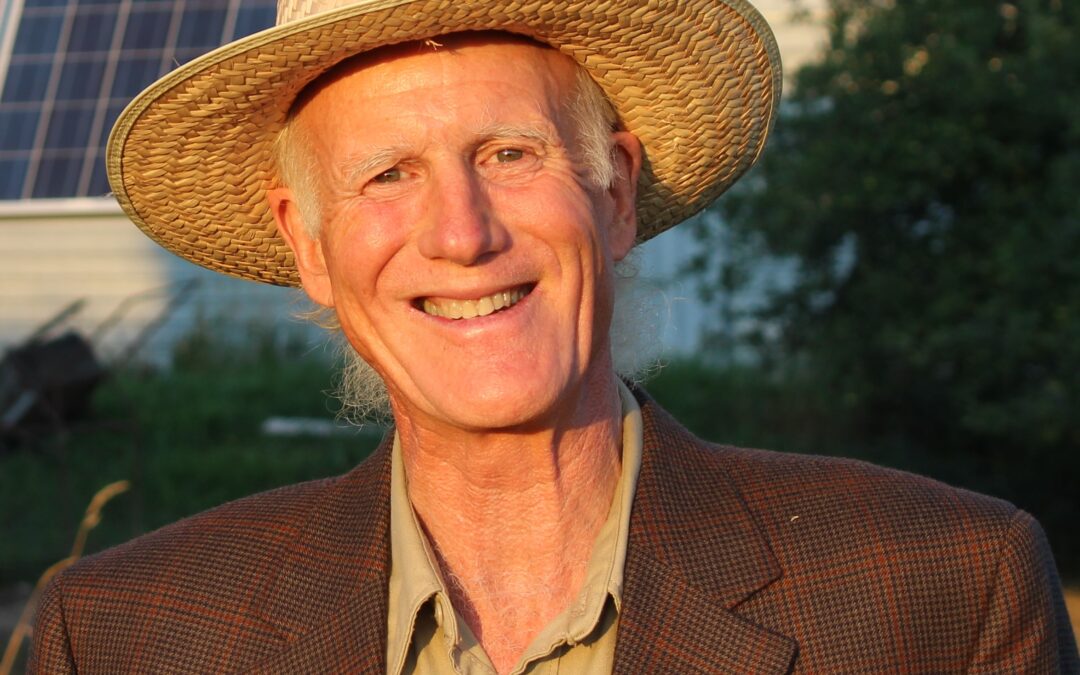
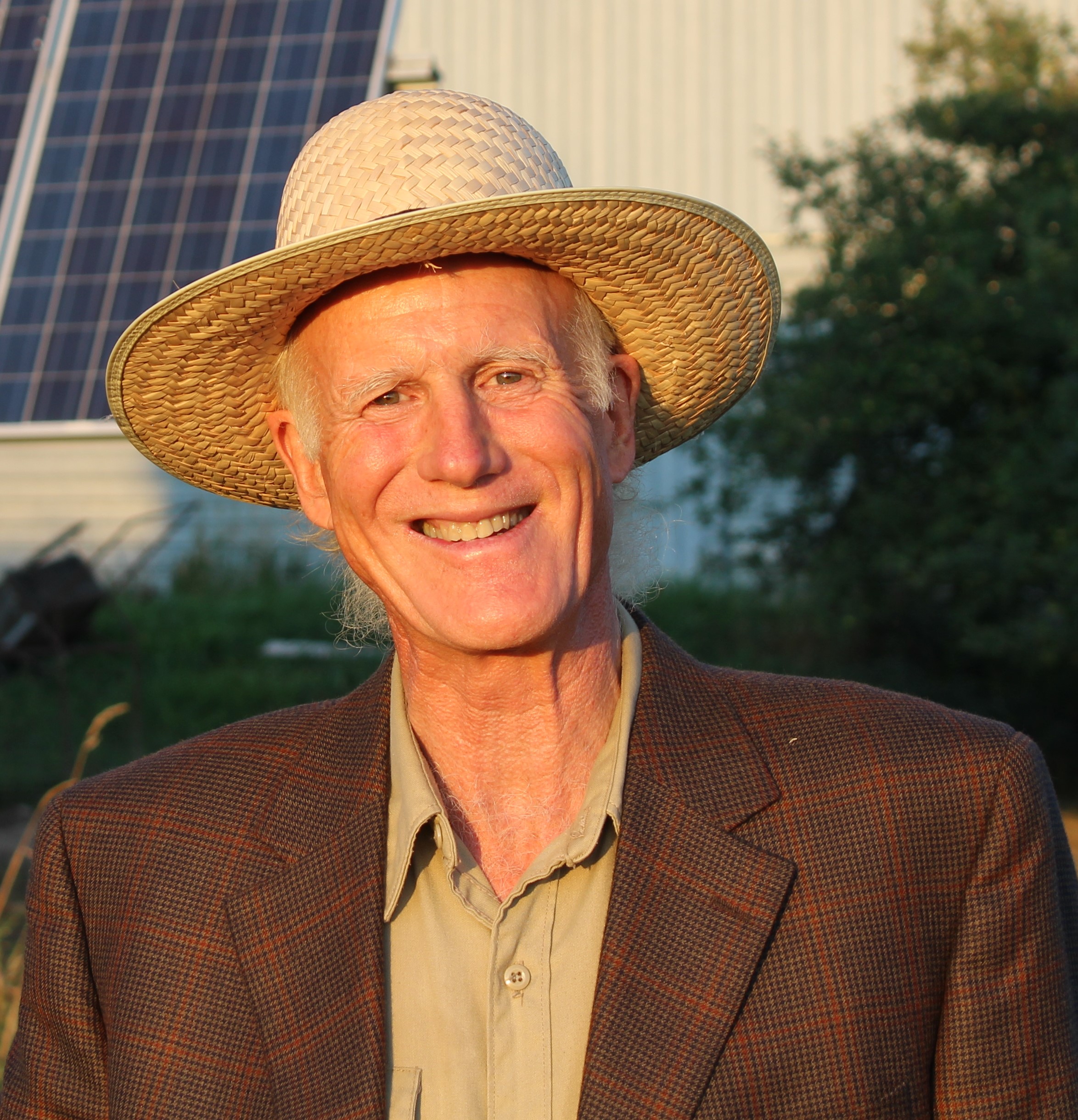
Tony McQuail bought a farm near Lucknow, Ontario in 1973. He and his wife, Fran, ran a diversified organic farm raising livestock, a small apple orchard and operated a community supported garden. McQuail was an early adopter of rotational grazing and has decades of experience in pasture management and fencing systems. They have been using Holistic Management principles and tools for over 25 years. At Meeting Place Organic Farm they raise grass fed and finished beef, pastured pork and pastured poultry and have done some experimenting with cocktail cover crops. They do some of their farming with work horses. They took a played-out crop farm from approximately 1.5% soil organic matter to 3.5 to 7% organic matter moving CO2 from the atmosphere into the soil. The McQuails have transferred the farm operation to their daughter Katrina and continue to be actively involved in it.
McQuail has an Honours Bachelor of Environmental Studies from the University of Waterloo and is a certified educator with Holistic Management International. He was instrumental in founding the Ecological Farmers Association of Ontario and the Collaborative Regional Alliance for Farmer Training. He has been president of both the Huron County Federation of Agriculture and the Huron Local of the National Farmers Union.
He has a long-standing interest in renewable energy including wind power, live horsepower, solar heating and photovoltaic systems. The McQuails designed and built a passive solar home in the mid 1970’s. The McQuails put up the first modern grid interconnected wind generator on the Ontario Hydro Grid in the late 1970’s. They annually produce more photovoltaic electricity from their microfit solar array than their home and farm business consume.
McQuail was the executive assistant to the Ontario Minister of Agriculture Food and Rural Affairs in the early 1990’s. During that time, he was involved in the process that developed Ontario’s Environmental Farm Plan Program which continues to this day. He is currently on Holistic Management Canada’s Board of Directors.

Find our more about Tony’s work in this YouTube video and the farm website.

Webinar Week

Measuring soil carbon and health on rangelands: A how-to webinar

When we think about regeneration we need to think broadly about interconnection. Regenerative agriculture is about land, but it is also about human and economic relationships. If we are going to be regenerative we have to look after the Land AND the People AND the Finances.
Do you struggle with wondering what is the right decision to make to help you farm or ranch more regeneratively? Learn how to use HMI’s Holistic Management(R) Decision-Making Matrix and the 7 testing questions that have helped thousands of farmers and ranchers improve their on-farm/ranch decisions. With these questions you can learn how to test decisions towards a whole farm/ranch goal so you take into account social, ecological, and economic factors and address the root cause of problems you are facing.
Another element of being regenerative is being adaptive and responsive to our situation, be it ecological, social or financial. That is where Holistic Management’s (R) monitoring and replanning can be of great help.
During the workshop we will explore these tools and share some stories of how they have worked in our lives at Meeting Place Organic Farm.

Wayne Knight

Wayne Knight

Wayne Knight

John Liu

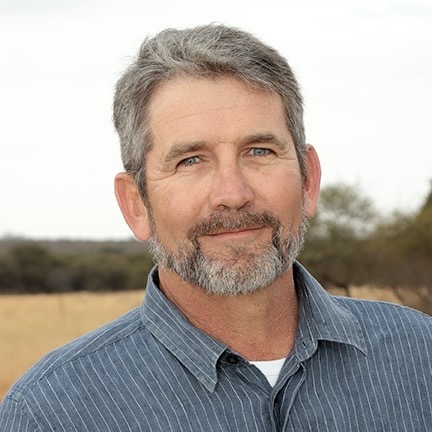
With 27 years of ranching experience using Holistic Management, Wayne has had an identity crisis. When he joined the 11 000-acre family ranching business he called himself a cattle rancher. He changed to calling himself a grass farmer. Later still, he called himself a soil-microbe farmer, though he has always marketed beef. Privileged to work with his father, Tom Knight, who was an early adopter of Holistic Management under Allan Savory – Stan Parsons consulting, Wayne enthusiastically increased and intensified the practices HMI teaches. He became a Certified Educator in 2006 and was actively involved with the Southern African CE community organization, Community Dynamics. He has spoken at numerous conferences in Southern Africa, trained and mentored farmers, hosted open days on his property, and has written about his positive results using Holistic Management. Before joining the team at HMI Wayne served as a board member of the organization for 8 years. Through his enthusiasm for Holistic Management Wayne has traveled widely visiting farmers who practice high-density, long recovery grazing practices in Southern Africa, Australia, and the US. As a young graduate with a Science degree in Agricultural Economics from the University of Natal, South Africa, he traveled across the US west working on ranches in Nebraska, Kansas, Colorado, California, and New Mexico. When not involved in Holistic Management you will find him fishing, birding, hiking, or exploring wild spaces and places with his family. An enthusiastic traveler, hunter, and photographer, he loves discovering new places and making new friends.

Webinar Week

Low-Cost, Low-Risk Grazing

In this 90-minute webinar, experienced grazers Wayne Knight & Linda Pechin-Long will examine risk, stress, and quality of life in production decisions and share their experience with the “Safe-to-Fail Trial” method for grazing management.